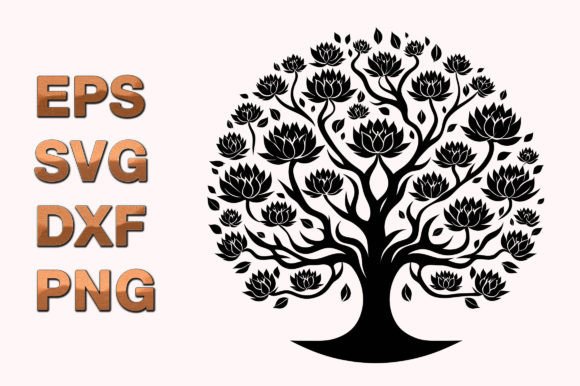
Unlocking Creative Potential with Decorative Tree Silhouette Vector SVG Designs
In the evolving landscape of digital design and physical crafting, the demand for versatile, high-quality graphical assets has never been higher. Among the most sought-after resources are vector-based illustrations that offer scalability without loss of fidelity. A prime example of such a resource is the Decorative Tree Silhouette Vector SVG. This specific type of graphic asset serves as a foundational element for a wide array of creative projects, ranging from large-scale architectural murals to intricate textile patterns. Understanding the utility, technical specifications, and practical applications of these files is essential for professionals, hobbyists, and business owners alike who wish to elevate their visual output.
The Technical Superiority of Vector Formats
To fully appreciate the value of a decorative tree silhouette, one must first understand the distinction between raster and vector graphics. Raster images, such as standard JPEGs or low-resolution PNGs, are composed of a fixed grid of pixels. When enlarged beyond their original dimensions, they suffer from pixelation, resulting in jagged edges and a loss of clarity. In contrast, a Decorative Tree Silhouette Vector SVG utilizes mathematical equations to define lines, curves, and shapes. This fundamental difference means that the design can be scaled infinitely—from the size of a postage stamp to the side of a building—while maintaining crisp, clean edges.
The inclusion of multiple file formats within a single design package further enhances its utility. A comprehensive download typically includes an EPS file, which is the industry standard for professional printing and editing in software like Adobe Illustrator. The SVG format is optimized for web use, ensuring that the tree silhouette renders perfectly on any screen size without increasing load times. For those utilizing computer-controlled cutting machines, such as Cricut or Silhouette, the DXF file is indispensable, providing the precise path data needed for accurate cuts. Finally, a high-resolution PNG with a transparent background offers immediate usability for users who may not have access to advanced vector editing software, allowing for quick drag-and-drop application in word processors or basic design tools.
Versatility Across Industries and Applications
The adaptability of a classic tree silhouette makes it a ubiquitous element in various sectors. In the realm of textile design, these motifs are frequently employed to create seamless patterns for fabrics. Whether printed on cotton for home decor curtains or synthesized fibers for athletic wear, the clean lines of a vector silhouette ensure that the print remains sharp regardless of the fabric's texture or the scale of the repetition. Interior designers often leverage these assets for wallpapers and wall decals. A repeating pattern of stylized trees can transform a sterile room into a serene, nature-inspired sanctuary, adding a touch of classic charm that resonates with timeless aesthetic preferences.
The merchandise industry also relies heavily on such designs. The ability to apply a single Decorative Tree Silhouette Vector SVG across diverse products is a significant economic advantage for small business owners and print-on-demand entrepreneurs. These designs are perfectly suited for:
- Apparel: Creating striking graphics for T-shirts, hoodies, and tote bags where bold, black-and-white contrasts are often preferred.
- Drinkware: Applying heat transfers or sublimation prints to mugs and tumblers, where the durability of the vector line work ensures longevity.
- Stationery and Paper Goods: Designing elegant poster cards, wedding invitations, and greeting cards that require a sophisticated, organic touch.
- Stickers and Labels: Producing die-cut stickers for laptops, water bottles, or product packaging, where the DXF file facilitates precise contour cutting.
Furthermore, educators and researchers utilize these silhouettes for instructional materials. In biology or environmental science contexts, a clear, uncluttered tree outline can serve as an effective diagrammatic tool, free from the distractions of photorealistic details, allowing students to focus on structure and form.
Implementation Workflows for Creators
Integrating a downloaded tree silhouette into a project workflow varies depending on the end goal. For a graphic designer working on a branding package, the process might begin by importing the EPS file into a vector editing suite. Here, the anchor points can be manipulated to customize the tree's shape, perhaps thickening the trunk to match a robust brand identity or simplifying the branches for a minimalist logo. The copyright-free nature of high-quality templates allows for this level of modification without legal ambiguity, provided the licensing terms are respected.
For crafters using digital cutting machines, the workflow is equally streamlined but focuses on material preparation. After importing the DXF or SVG into the machine's proprietary software, the user selects the material type—be it vinyl, cardstock, or heat transfer film. The software utilizes the vector paths to calculate the cutting force and speed. Because the source file is a true vector derived from an original design, the machine encounters no ambiguous pixels, resulting in a cut that is smooth and continuous. This precision is critical when producing intricate wall art or detailed stencils where broken lines could ruin the final aesthetic.
Web developers and UI designers find the SVG format particularly valuable. Unlike raster images that require multiple versions for different screen densities (1x, 2x, 3x), a single SVG file adapts to all resolutions. When embedding a decorative tree motif into a website header or as a background element, the code remains lightweight, contributing to faster page load speeds—a crucial factor for SEO and user experience. The transparency of the background in these files ensures that the tree silhouette blends seamlessly with any underlying color scheme or dynamic content.
Quality Standards and File Specifications
Not all digital assets are created equal. When sourcing a Decorative Tree Silhouette Vector SVG, attention to file specifications is paramount. A professional-grade package should offer a 4000 x 4000 Px PNG alongside the vector files. While the vector formats handle scaling, the high-resolution PNG serves as a reliable fallback for platforms that do not support SVG or EPS uploads. The resolution of 4000 pixels ensures that even when used at near-full size in a raster environment, the image retains sufficient detail for high-quality printing.
The concept of "original design" is another critical quality marker. In a market saturated with recycled and overused clip art, accessing a 100% original design ensures that the resulting project stands out. Unique silhouettes possess distinct characteristics in their branch structures, leaf densities, and overall proportions that differentiate them from generic stock imagery. This uniqueness is vital for businesses aiming to establish a distinct visual identity. Moreover, knowing that a design is copyright-free (or royalty-free with appropriate licensing) provides peace of mind. It eliminates the risk of cease-and-desist orders or unexpected licensing fees down the line, allowing creators to monetize their end products confidently.
Strategic Considerations for Business Owners
For entrepreneurs in the e-commerce space, the choice of design assets directly impacts profit margins and operational efficiency. Utilizing a multi-format bundle containing EPS, SVG, DXF, and PNG files reduces the need to purchase separate assets for different production methods. A single purchase can supply the graphics needed for a website banner (SVG), a printed catalog (EPS), a custom sticker line (DXF), and social media posts (PNG). This consolidation of resources streamlines the supply chain and reduces overhead costs.
Additionally, the thematic relevance of tree motifs cannot be overstated. Trees symbolize growth, stability, and nature—universally positive associations that resonate with a broad consumer base. Whether targeting eco-conscious consumers with sustainable product lines or appealing to families with home decor items, the Decorative Tree Silhouette acts as a versatile visual anchor. Its classic charm transcends fleeting design trends, offering a longevity that keeps products relevant for longer periods. This timelessness is particularly advantageous for inventory planning, as it reduces the risk of stock becoming obsolete due to changing fashion cycles.
Maximizing Output Through Layering and Composition
Advanced users often take these silhouettes further by employing layering techniques. By stacking multiple instances of a tree silhouette with varying opacities or colors, designers can create depth and dimensionality that mimics a forest scene without sacrificing the clean vector aesthetic. This technique is highly effective in creating backgrounds for posters or large-format wall art where a flat single-color image might appear too stark. The scalability of the vector format ensures that even complex compositions with dozens of overlapping elements remain manageable in terms of file size and rendering performance.
Moreover, the integration of these silhouettes into mixed-media projects opens new creative avenues. A vector tree can be laser-cut into wood or acrylic, painted, and then photographed for use in digital marketing, bridging the gap between digital design and tactile craftsmanship. The precision of the DXF file ensures that the laser cutter follows the exact intended path, preserving the integrity of the original artistic vision. This cross-disciplinary application highlights the robustness of well-constructed vector assets in modern creative workflows.
In conclusion, the Decorative Tree Silhouette Vector SVG represents more than just a digital image; it is a versatile tool that empowers creators across various domains. From the technical advantages of infinite scalability and format diversity to the aesthetic appeal of timeless natural motifs, these assets provide a solid foundation for innovation. Whether utilized for mass-produced merchandise, bespoke interior design, or educational materials, the value lies in the combination of high-resolution quality, original artistry, and the freedom to adapt. As the digital and physical worlds continue to converge, the role of such adaptable, high-fidelity graphics will only become more central to successful creative endeavors.