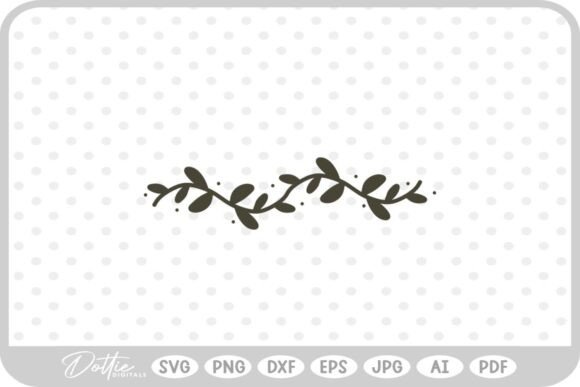
Mastering Your Crafts with Decorative Botanical Vine SVG PNG DXF Files
There is a distinct satisfaction in watching a cutting machine bring a design to life, transforming a flat sheet of vinyl or cardstock into something tangible and beautiful. For many creators, the Decorative Botanical Vine SVG PNG DXF collection represents more than just digital assets; it is the foundation for customizing t-shirts, stationery, bags, mugs, stickers, and framed artwork. However, jumping straight into a project without understanding the nuances of file formats and machine compatibility can lead to frustration. Whether you are a seasoned entrepreneur selling handmade goods or a hobbyist looking to personalize your home, knowing how to navigate these files ensures your final product matches your vision.
The appeal of botanical vines lies in their versatility. They offer an organic, elegant touch that fits seamlessly into wedding invitations, spring decor, or branding materials for small businesses. Yet, a common misunderstanding arises when users assume all digital files behave the same way across different software and hardware. This assumption often leads to wasted materials and time. To help you avoid these pitfalls, let's explore the specific characteristics of these formats and how to use them effectively.
Choosing the Right Format for Your Machine
One of the most frequent errors beginners make is downloading the wrong file type for their specific cutting machine. While high-quality cutting files are available in SVG, PNG, DXF, AI, JPG, and PDF formats, not every format is suitable for every task. For instance, if you are using a Cricut or Silhouette Cameo, the SVG (Scalable Vector Graphics) file is typically your best friend. It allows the machine to recognize individual cut lines, ensuring that the intricate details of the vine leaves and stems are cut precisely without unnecessary weeding.
Conversely, relying on a PNG or JPG for a cut project can be problematic. These are raster images, meaning they are made of pixels rather than mathematical paths. If you attempt to cut directly from a PNG without tracing it first in your design software, the machine may try to cut around every single pixel, resulting in a jagged, messy edge. Save PNGs for "Print then Cut" projects like stickers or for sublimation printing on mugs and shirts where cutting lines are not required. Similarly, DXF files are excellent for older software versions or specific CAD programs but may require extra cleanup in modern design apps compared to SVGs.
Avoiding Quality Loss and Scaling Issues
Another overlooked detail is the scalability of the design. A major advantage of vector files like SVG, DXF, and AI is that they can be resized infinitely without losing quality. However, if you inadvertently use a raster image (JPG/PNG) and stretch it to fit a large wall decal, the image will become pixelated and blurry. This mistake can ruin the professional presentation of your work, especially if you are selling these items to clients who expect crisp, clean lines.
To prevent this, always check the file extension before importing it into your workspace. If you need to create a large banner or a tiny jewelry tag, stick to the vector formats included in the Decorative Botanical Vine SVG PNG DXF pack. This ensures that whether you are scaling up for a storefront window or down for a gift tag, the botanical details remain sharp and defined.
Color Expectations and Printing Realities
When working with digital designs, it is easy to fall in love with the vibrant colors you see on your screen. However, a crucial reality check is needed: colors may look slightly different due to monitor settings. What appears as a lush forest green on your high-resolution display might print as a muted olive or a bright lime depending on your printer profile and the material you are using. Furthermore, the final result might vary based on the printing technique used.
For example, sublimation on a ceramic mug will yield different color saturation compared to heat transfer vinyl on a cotton t-shirt. Inkjet printers on glossy sticker paper will produce different results than laser printers on matte cardstock. To avoid disappointment, do not rely solely on your screen. If color accuracy is vital for your brand or project, run a test print on the actual material you intend to use. Adjust your printer settings accordingly, and consider creating a physical color swatch library for your most常用 materials. This proactive step saves money on failed batches and ensures client satisfaction.
Optimizing Workflow for Efficiency
Efficiency is key, especially for small business owners and freelancers managing tight deadlines. A common inefficiency occurs when users fail to organize their layers before sending a design to the machine. Botanical vines often contain many small, delicate parts. If these elements are not grouped or welded correctly in your software, the cutting process can become disjointed, leading to shifted cuts or excessive weeding time.
Before cutting, take a moment to inspect the design in your software. Use the "weld" or "unite" function to merge overlapping lines if you want a single continuous cut. For multi-layered projects, such as a vine with berries in a contrasting color, ensure your layers are properly separated and assigned to the correct mat positions. This preparation minimizes material waste and reduces the time spent fixing errors post-cut.
Making the Most of Versatile Assets
The true power of these files lies in their adaptability. You are not limited to just one application. The same Decorative Botanical Vine SVG PNG DXF file can be used to create a cohesive brand identity across various products. Imagine using the vine motif as a border for your business cards (PDF), a decal for your packaging boxes (SVG), and a graphic for your social media posts (PNG). This consistency strengthens your brand recognition without requiring new designs for every platform.
However, remember that context matters. A design that looks stunning on a white background might disappear on a dark shirt unless you adjust the layering or add a backing layer. Always visualize the end environment of your project. Will the vine be applied to a curved surface like a water bottle? If so, simplify the design slightly to accommodate the curve, preventing the vinyl from bubbling or peeling over time.
Final Checks Before You Create
Before you hit "make," perform a quick audit of your project setup. Verify that your blade is sharp enough for the material, that your mat has sufficient tackiness to hold the stock, and that your mirror image setting is toggled on if you are using iron-on vinyl. These small checks are often the difference between a polished final product and a frustrating redo.
Let your creativity shine with these versatile files, but ground your process in practical preparation. By understanding the differences between file formats, managing color expectations, and optimizing your workflow, you transform potential headaches into smooth, enjoyable crafting sessions. Whether you are making a one-of-a-kind gift or building a product line, these carefully crafted files provide the perfect starting point for creating something truly unique.