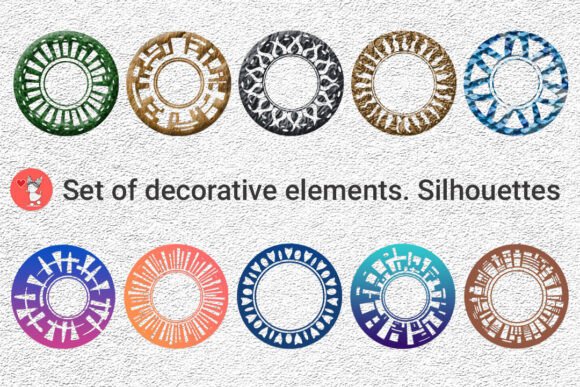
Elevate Designs with Silhouette Decorative Elements
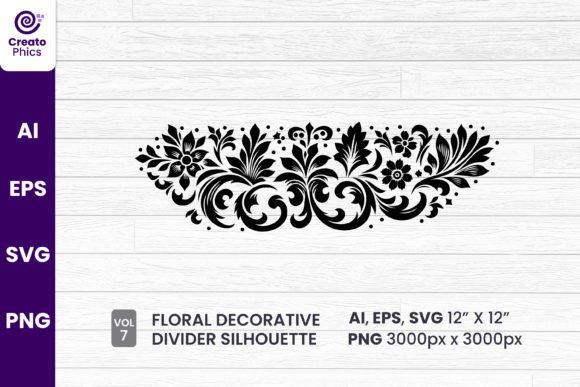
In the fast-paced world of digital creation and physical crafting, finding assets that balance aesthetic appeal with technical flexibility is often the difference between a good project and a great one. A Set of Decorative Elements. Silhouettes offers exactly this kind of versatility. Unlike complex illustrations that demand specific color palettes or intricate shading to look correct, silhouettes rely on form and negative space. This simplicity makes them incredibly powerful tools for designers, small business owners, educators, and hobbyists who need to communicate ideas clearly without visual clutter.
These elements are not just static images; they are foundational building blocks for a wide array of creative endeavors. Whether you are designing a logo for a new startup, creating custom wall art for a nursery, or producing marketing materials for a local event, the adaptability of silhouette graphics allows you to tailor the design to your specific needs. The core value lies in their ability to be scaled, edited, and combined without losing quality, ensuring that your final output looks professional regardless of the medium.
The Power of Vector Scalability in Professional Projects
One of the most significant advantages of utilizing a Set of Decorative Elements. Silhouettes is the inclusion of vector formats such as EPS, SVG, AI, PDF, and DXF. For professionals working across different platforms, this is crucial. Vector files use mathematical paths rather than pixels, meaning you can scale an element from the size of a business card to a large-format banner without any loss of resolution or sharpness.
Consider a scenario where a freelance graphic designer is tasked with creating a brand identity for a coffee shop. The client needs a logo that will appear on everything from tiny espresso cups to a massive storefront sign. Using raster images (like standard JPEGs) would result in pixelation when enlarged. However, with the vector files provided in this set, the designer can confidently resize the silhouette elements to fit any dimension. Furthermore, because these are vectors, every node and curve is editable. You can modify the shape of a leaf, extend a branch, or simplify a complex outline to better suit the brand's minimalist aesthetic. This level of control streamlines the revision process and ensures the final design is perfectly aligned with the client's vision.
Seamless Integration for Digital and Print Media
The utility of these decorative elements extends beyond just scalability; it encompasses ease of integration into both digital and print workflows. The set includes PNG files with transparent backgrounds, which are essential for quick deployment in digital environments. For bloggers, social media managers, and content creators, having ready-to-use silhouettes with no background means you can overlay these graphics onto photos, colored backgrounds, or video thumbnails instantly.
For instance, an educator creating a presentation on botany can drag and drop these silhouette leaves and flowers directly onto their slides. Because the background is transparent, there is no need for time-consuming photo editing to remove white boxes around the images. Similarly, for print applications like stickers, signs, and t-shirts, the high-resolution PNGs ensure crisp edges, while the vector files provide the master source for professional printing presses. This dual-format approach saves time and reduces the friction often associated with preparing files for different output methods.
Unlocking Creativity Through Customization
Creativity often thrives on constraints, but it flourishes with flexibility. A Set of Decorative Elements. Silhouettes encourages experimentation by allowing users to combine objects, add text, and change colors freely. Since silhouettes are typically single-color shapes, they serve as perfect canvases for typography. You can place text inside the negative space of a large silhouette or arrange multiple elements to frame a headline.
Imagine a small business owner launching a line of organic skincare products. They can take the floral and botanical silhouettes from the set, arrange them into a unique border, and apply a custom earth-tone color palette that matches their brand guidelines. By combining different elements—perhaps mixing a fern silhouette with a geometric shape—they create a proprietary design that feels unique rather than generic. The ability to edit these files in software like Adobe Illustrator or even free alternatives like Inkscape means that the limit is truly your imagination. You are not stuck with a pre-made composition; you are given the ingredients to cook up something entirely your own.
Practical Applications Across Industries
The versatility of this collection makes it relevant for a diverse audience. Marketers can use these elements to create eye-catching banners for seasonal sales, using bold silhouettes to draw attention without distracting from the call-to-action text. Wedding planners and stationers can utilize the delicate nature of certain silhouettes to design elegant invitations, save-the-dates, and table numbers. The clean lines of vector silhouettes translate beautifully to laser cutting and vinyl cutting machines, making them ideal for physical crafts like wooden signs or heat-transfer vinyl for apparel.
For web developers and UI designers, SVG files from this set are particularly valuable. SVGs are code-based, meaning they load quickly on websites and remain crisp on high-DPI screens (like Retina displays). Using these decorative elements as icons or section dividers can add a touch of sophistication to a website without impacting load times. This technical efficiency, combined with aesthetic appeal, supports better user experience and engagement.
Technical Considerations and Best Practices
While the benefits of using a Set of Decorative Elements. Silhouettes are extensive, it is important to understand the technical landscape to maximize their potential. The set provides files in multiple formats: EPS, PNG, SVG, AI, PDF, and DXF. Knowing which format to use for which task is key. Use PNGs for quick mockups, social media posts, or documents where vector editing isn't required. Reserve the AI, EPS, and SVG files for projects requiring resizing, color manipulation, or professional printing.
It is also worth noting that while silhouettes are versatile, their effectiveness depends on contrast. When placing a dark silhouette on a dark background, the design may lose its impact. Users should always test their combinations to ensure readability and visual hierarchy. Additionally, while the files are editable, complex modifications should be done with an understanding of vector path logic to avoid distorting the original proportions of the design.
Ultimately, incorporating these elements into your workflow is about efficiency and quality. Instead of spending hours drawing custom icons or searching for inconsistent clip art, you have a cohesive library of high-quality assets at your disposal. This allows you to focus more on the strategic aspects of your project—such as messaging and layout—rather than getting bogged down in asset creation. Whether you are a seasoned designer looking to speed up your process or a hobbyist eager to bring a personal vision to life, these tools provide the foundation needed to create beautiful, professional results.
By leveraging the strengths of both vector and raster formats, and by embracing the creative freedom these silhouettes offer, you can elevate the visual quality of your cards, stickers, logos, and wall art. The goal is to bring beauty and clarity to your life and projects, turning abstract ideas into tangible, visually striking realities. With the right tools and a bit of creativity, the possibilities for what you can achieve are virtually endless.